
CEAF impulsa la investigación vegetal avanzada tras capacitación en técnicas nucleares para el mejoramiento agrícola
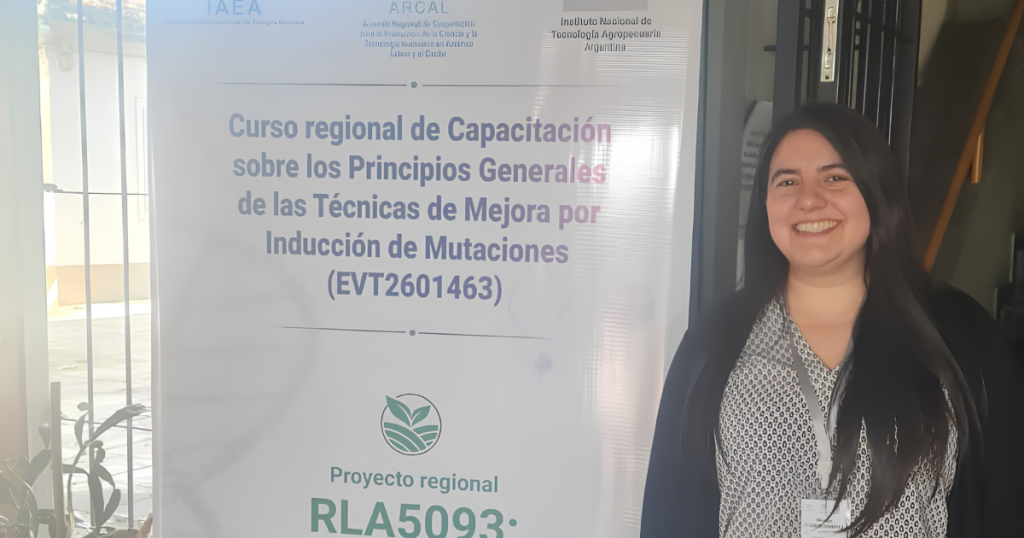
La investigadora postdoctoral y Dra. en Nutrición y Alimentos, Mónica Flores representó al Centro de Estudios Avanzados en Fruticultura (CEAF) en una instancia internacional dictada por el INTA de Argentina con financiamiento del OIEA. En la oportunidad, se destacaron las capacidades de infraestructura y capital humano especializado con que cuenta Chile para aplicar este tipo […]
Identifican bacterias de una planta nativa en la costa chilena que potencia características de resistencia en plantas
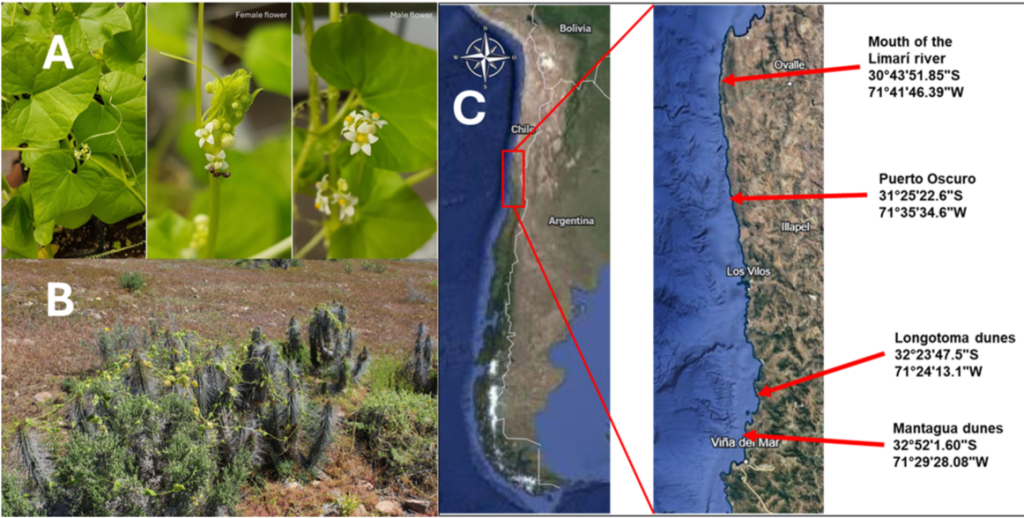
Investigadores del CEAF descubrieron cómo microorganismos aislados de las raíces de una especie nativa ayudan a potenciar la resistencia hídrica en portainjertos de sandías y melones. Un grupo de investigadores CEAF coordinados por el Dr. Ariel Salvatierra, investigador principal de la Línea de Investigación Hortícola, publicó recientemente el artículo científico “Increased Drought Tolerance in Lagenaria […]
Mirar el suelo para hacer frente al cambio climático: Innovación biotecnológica resguarda la agricultura nacional

El proyecto científico chileno, HoloDroNE, combina herramientas de biología molecular, fisiología vegetal y análisis del suelo para estudiar las necesidades de las plantas y potenciarlas desde las raíces de forma natural, beneficiando su salud y producción. El proyecto HoloDroNE descifra el lenguaje químico del suelo para potenciar las raíces de las plantas y así enfrentar […]
Increased Drought Tolerance in Lagenaria siceraria by Indigenous Bacterial Isolates from Coastal Environments in Chile: Searching for the Improvement of Rootstocks for Cucurbit Production
Drought is one of the most limiting abiotic stresses for agricultural production, especially in horticultural crops grown in arid and semi-arid areas. In the present study, we evaluated the potential of bacterial isolates obtained from coastal environments in Chile to improve drought tolerance in Lagenaria siceraria, a plant species increasingly used as a rootstock for cucurbit cropping. Rhizosphere bacteria were isolated from Sicyos baderoa, the only native cucurbit species of the Chilean coast, from which four isolates with plant growth-promoting traits, such as indole-3-acetic acid production, phosphorus solubilization, nitrogen fixation, and siderophore production, were selected. These isolates were inoculated on two L. siceraria genotypes, Illapel and Osorno, under both normal irrigation and water deficit conditions. The results showed that Peribacillus frigoritolerans showed a clearer positive effect on biomass and net photosynthesis under water deficit in the Illapel genotype, increasing shoot biomass by up to ~75% and restoring net photosynthetic rates by up to ~260% relative to non-inoculated drought-stressed plants. In contrast, responses associated with Staphylococcus succinus and those observed in the Osorno genotype were mainly expressed as trait- and tissue-specific adjustments, consistent with a more stabilizing response rather than broad growth stimulation. Additionally, malondialdehyde levels were reduced by up to ~25%, while free proline accumulation increased by more than 100% under water deficit. In contrast, total phenolic compounds showed more variable responses, indicating genotype- and strain-specific adjustment of antioxidant metabolism. Overall, the observed responses were heterogeneous and strongly dependent on the specific strain–genotype–trait combination and, therefore, should be interpreted as preliminary evidence supporting the potential value of native rhizobacteria for improving early drought-related traits in cucurbit rootstocks. Among the tested strains, Peribacillus frigoritolerans emerged as the most promising candidate for enhancing early drought tolerance in responsive genotypes such as Illapel, while highlighting the need for follow-up studies under replicated nursery and field conditions, including grafted plants, multiple drought intensities and combined inoculant strategies.
From the atom to the field: Targeting DNA lesions gamma-ray induced underlying the water deficit-tolerant phenotypes within a segregating mutant population of Lagenaria siceraria
Identificar y caracterizar las lesiones genómicas inducidas por irradiación gamma asociadas a fenotipos tolerantes a déficit hídrico en poblaciones mutantes segregantes de Lagenaria siceraria, integrando aproximaciones fisiológicas, genómicas y de fenotipificación avanzada desde la escala molecular hasta condiciones de campo.
Agencia Internacional de Energía Atómica: Strengthening the National Cooperation Network in the Use of Nuclear Techniques in Plant Breeding Programmes
Proyecto de Cooperación Técnica CHI5055
“Holobiont biotechnology for sustainable agriculture facing water scarcity (HOLODRONE)”
El objetivo es dilucidar los rasgos metabólicos y de arquitectura de raíces en portainjertos de frutales de carozo y cucurbitáceas que impulsan la interacción simbiótica planta-microorganismo, permitiendo el desarrollo de un holobionte resistente capaz de mejorar la tolerancia a la sequía.